
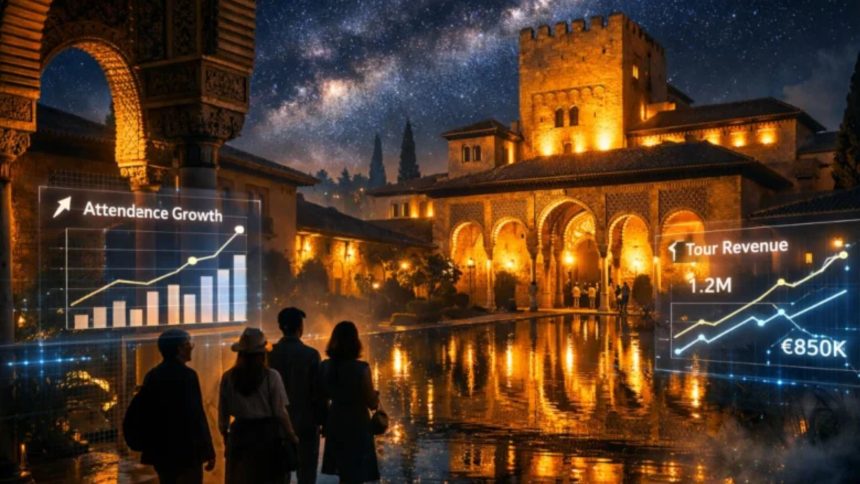
When the sun dips below the hills of Granada, something extraordinary begins to unfold. The glowing walls of the Alhambra come alive under soft lighting, shadows stretch across ancient courtyards, and history feels closer than ever. But beyond its beauty, the night tour of this iconic monument is also a fascinating story of visitor numbers, economic impact, and cultural preservation.
In this article, we’ll explore how evening visits to this UNESCO treasure contribute to tourism, how attendance trends have evolved, and what kind of revenue these tours generate. Think of it as stepping behind the curtain—not just to admire the architecture, but to understand the engine that keeps it thriving.
The Allure of Visiting the Alhambra at Night
A Different Experience After Sunset
Have you ever wondered how a place can feel completely different just by changing the time of day? That’s exactly what happens here. During the day, crowds move steadily through halls and gardens. At night, everything slows down.
The gentle lighting highlights intricate carvings, while silence replaces daytime chatter. It’s almost like the palace is whispering its secrets directly to you.
Limited Access Creates Exclusivity
Night tours are intentionally restricted. Fewer visitors are allowed in, which means less crowding and a more intimate experience. This exclusivity not only enhances visitor satisfaction but also plays a key role in pricing and revenue generation.
Understanding Attendance Trends
Annual Visitor Numbers
The Alhambra is one of the most visited landmarks in Spain, attracting millions each year. While daytime visits dominate, night tours still account for a significant portion of total attendance.
On average, hundreds of thousands of visitors choose evening entry annually. Though smaller in number compared to daytime crowds, these visitors often represent a more premium segment.
Seasonal Variations
Attendance fluctuates depending on the time of year:
- Peak Season (Spring & Summer): High demand for both day and night tours
- Shoulder Season (Autumn): Moderate attendance, with more relaxed booking
- Low Season (Winter): Fewer tourists, but still steady interest in night visits
Interestingly, many travelers prefer night tours during summer to avoid daytime heat, especially in southern Spain.
Who Attends Night Tours?
International Tourists vs Local Visitors
The majority of night visitors come from abroad. Travelers from Europe, North America, and Asia often include the Alhambra in their bucket lists.
However, locals and domestic tourists also show strong interest—especially for special occasions or weekend experiences.
Demographics and Preferences
Night tours tend to attract:
- Couples seeking a romantic atmosphere
- History enthusiasts wanting a deeper connection
- Photographers chasing unique lighting conditions
- Travelers looking for a quieter alternative
In a way, the audience is more niche, but also more engaged.
Ticket Pricing and Revenue Structure
How Much Does a Night Tour Cost?
Night tickets are generally priced slightly lower or comparable to daytime entry, depending on the section of the palace included.
Typical pricing tiers include:
- General admission
- Reduced rates (students, seniors)
- Special access areas like the Nasrid Palaces
Despite fewer visitors, the controlled access ensures consistent revenue flow.
Revenue Breakdown
Revenue from night tours comes from:
- Ticket sales
- Guided tour packages
- Premium experiences
Even with limited capacity, night tours generate millions annually due to steady demand and strategic pricing.
Economic Impact on Granada
Boosting Local Businesses
Night tourism doesn’t just benefit the palace—it spills over into the local economy of Granada.
Visitors often:
- Dine at nearby restaurants
- Stay overnight in hotels
- Shop for souvenirs
This creates a ripple effect, supporting jobs and small businesses.
Extended Tourist Stay
Evening tours encourage visitors to stay longer. Instead of a quick daytime visit, travelers may spend an extra night—leading to increased spending across the city.
Balancing Tourism and Preservation
Controlled Visitor Capacity
The Alhambra isn’t just a tourist attraction—it’s a fragile historical site. Night tours are carefully managed to protect its architecture and artwork.
By limiting attendance, authorities reduce wear and tear while still generating income.
Sustainable Tourism Practices
Revenue from tickets is reinvested into:
- Restoration projects
- Maintenance of gardens and structures
- Cultural programs
This ensures the monument remains preserved for future generations.
Technology and Booking Systems
Online Reservations and Demand Management
Booking a night tour typically requires advance planning. Online systems help regulate visitor flow and prevent overcrowding.
Dynamic pricing and availability tracking also help maximize revenue while maintaining accessibility.
Digital Enhancements
Some tours now include:
- Audio guides
- Mobile apps
- Virtual previews
These additions enhance visitor experience and justify premium pricing.
Comparing Day vs Night Revenue
Volume vs Value
Day tours generate higher total revenue due to sheer volume. However, night tours often yield higher revenue per visitor.
It’s a classic case of quantity versus quality.
Visitor Experience Impact
Satisfied visitors are more likely to:
- Recommend the experience
- Return in the future
- Spend more on related services
In that sense, night tours contribute indirectly to long-term revenue growth.
Cultural Significance of Night Tours
A Deeper Connection to History
At night, the palace feels closer to its original era. Without the distractions of crowds, visitors can better imagine life during the Nasrid dynasty.
It’s like stepping into a living painting—where every detail tells a story.
Events and Special Programs
Occasionally, night tours include:
- Cultural performances
- Themed visits
- Educational programs
These events add value and attract repeat visitors.
Challenges Facing Night Tourism
Limited Capacity Constraints
While exclusivity is a strength, it also limits revenue potential. Only a certain number of tickets can be sold each night.
Weather and External Factors
Rain, extreme temperatures, or global travel disruptions can affect attendance.
Operational Costs
Lighting, security, and staffing at night increase operational expenses, which must be balanced against ticket income.
Future Outlook for Night Tours
Growing Demand for Unique Experiences
Modern travelers increasingly seek meaningful experiences rather than just sightseeing. Night tours fit perfectly into this trend.
Potential Expansion
There’s potential for:
- Extended night hours
- New tour routes
- Enhanced digital experiences
However, any expansion must carefully balance preservation needs.
Why Night Tours Matter More Than You Think
You might think of a night visit as just a different time slot—but it’s much more than that. It’s a strategic tool that blends tourism, economics, and cultural preservation.
Like a well-tuned orchestra, every element—from ticket pricing to visitor limits—works together to create harmony.
Conclusion
The night tours of the Alhambra are not just about breathtaking views under moonlight. They represent a thoughtful balance between accessibility and preservation, between visitor satisfaction and economic sustainability.
While attendance may be smaller compared to daytime visits, the impact is significant. From generating steady revenue to supporting local businesses in Granada, these evening experiences play a crucial role in the broader tourism ecosystem.
So next time you think about visiting, ask yourself: would you rather see history in daylight—or feel it come alive at night?
FAQs
1. How many people attend the Alhambra night tours each year?
Attendance varies, but typically hundreds of thousands of visitors choose night tours annually, making it a significant segment of total visitors.
2. Are night tours more expensive than daytime visits?
Prices are generally similar or slightly lower, but limited availability and added ambiance often make them feel more premium.
3. Why is attendance limited for night tours?
To protect the historical structure and ensure a high-quality experience, visitor numbers are strictly controlled.
4. Do night tours generate significant revenue?
Yes, despite fewer visitors, they contribute millions annually due to steady demand and efficient pricing strategies.
5. Is the night tour worth it compared to the day visit?
Absolutely. If you value a quieter, more atmospheric experience, the night tour offers something truly special that daytime visits can’t replicate.